Formation of startups and new companies
Commercial exploitation of science, technology, and novelty
System of laws, regulations, strategies, and funding priorities
Discovery and creation of new knowledge of the natural world
Technological Advancements in the world.
Commentary
The Arab world cannot afford to ignore curiousity-driven basic research in favour of applied research, if the different states hope to produce an enlightened science culture at home.
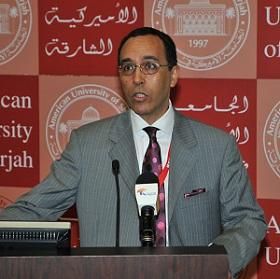
Nidhal Guessoum
When the British physicist J. J. Thomson won the Nobel Prize in 1906 for his discovery of the electron, he proposed a toast at a celebratory dinner reception: “To the electron – may it never be of any use to anybody.” He was proudly defending the then “obvious fact” that the electron was a discovery with no application, a “basic” type of research. A century later, not only does the electron have wide-ranging uses in our lives (from electronics to medicine), but its yearly “market value” is more than three trillion US dollars. In the same spirit, Margaret Thatcher once remarked that Michael Faraday (the 19th century British physicist whose basic research led James Maxwell to discover electromagnetic waves) was, in today’s market, worth more than the London Stock Exchange.
But before we debate the relative importance of basic research, particularly in the Arab context, we need to agree on what we mean by that. The French say “recherche fondamentale”, referring to any research around a foundational topic, be it in the laws and fabric of nature or in the essential components (particles, fields), interactions and phenomena that we need to scientifically understand and describe it. Some have described basic research as one where the outcome is unknown. Wernher von Braun, the German-American rocket scientist, boldly defined basic research as “what I am doing when I don’t know what I am doing.” In contrast, applied research, and more so development research, is the kind where the goal is defined in advance, such as producing a more efficient solar cell for example.
With this distinction, and noting that sometimes the areas overlap, one may legitimately ask: shouldn’t the Arab world, with its need for development across all aspects of its socio-economic life, focus on applied research? How could anyone argue for more support for basic research? Does it make sense for Arab governments to spend on such “useless” fields as astronomy, particle physics, archaeology, and the like? Is basic research a luxury that should only be afforded by rich and more developed nations?
Before I address the research and funding situation in the Arab world, let us review the main arguments for basic research, since the benefits of applied research are broadly accepted. The goal of research should be to promote socio-economic development, particularly for less advanced countries. Resources and policies should support that goal.
A common defense of basic research is that eventually it leads to applications. Indeed, few innovations are made without prior discoveries in fundamental science. In a famous study on biomedical sciences, one hundred specialists were asked to vote on the top 10 advances in cardiovascular medicine between 1945 and 1975. Once those ten advances were listed, the investigators reviewed 4,000 articles in search of the key scientific developments that led to those practical advances. Of those articles, 2,500 were found to be relevant, and 62% of these reported basic research.
“Twenty Arab countries are found to produce 6,000 books per year, compared to more than 100,000 in North America, for a comparable population.”
 [CAIRO] Egypt plans to launch its second satellite for scientific research and establish a new space authority and national space agency as well as work with other African states to pave the way for a new African space agency.
But some experts have warned that the aspirations may exceed Egypt’s financial and human resources, and that the country is rushing to launch a new satellite despite having learnt little from the loss of its first one in 2010 after just three years of operation.
The planned satellite, called EgyptSat 2, will be manufactured, assembled and tested in Egypt, Mohamed Medhat Mokhtar, chair of the National Authority for Remote Sensing and Space Science...
[CAIRO] Egypt plans to launch its second satellite for scientific research and establish a new space authority and national space agency as well as work with other African states to pave the way for a new African space agency.
But some experts have warned that the aspirations may exceed Egypt’s financial and human resources, and that the country is rushing to launch a new satellite despite having learnt little from the loss of its first one in 2010 after just three years of operation.
The planned satellite, called EgyptSat 2, will be manufactured, assembled and tested in Egypt, Mohamed Medhat Mokhtar, chair of the National Authority for Remote Sensing and Space Science... By: Maheen Hasan, Editor - Muslim-Science.Com
Muslim-Science.Com has the pleasure of presenting to you, the first ever List of ‘Top-20 Most Influential Women in Science in the Islamic World’. These are truly the unsung and little known heroines of the Islamic World whose contribution to the development of science and innovation of the Islamic World is no less than any others…
Our list encompasses 20 Remarkable Women who have performed amazing feats during the course of their careers. These pertain to all five main regions of the Islamic World, namely, South East Asia, South and Central Asia, Gulf and Persia, Maghreb and North Africa, and North Am...
By: Maheen Hasan, Editor - Muslim-Science.Com
Muslim-Science.Com has the pleasure of presenting to you, the first ever List of ‘Top-20 Most Influential Women in Science in the Islamic World’. These are truly the unsung and little known heroines of the Islamic World whose contribution to the development of science and innovation of the Islamic World is no less than any others…
Our list encompasses 20 Remarkable Women who have performed amazing feats during the course of their careers. These pertain to all five main regions of the Islamic World, namely, South East Asia, South and Central Asia, Gulf and Persia, Maghreb and North Africa, and North Am... By Kit Eaton
Remember the name, because you might see it again: Aisha Mustafa, a 19-year-old Egyptian physics student, patented a new type of propulsion system for spacecraft that uses cutting edge quantum physics instead of thrusters.
First, a little background: One of the strange quantum facts at work in Mustafa’s engine idea is that there’s no such thing as a vacuum, devoid of particles, waves, and energy. Instead the universe’s supposedly empty spaces are filled with a roiling sea of particles and anti-particles that pop into existence, then annihilate each other in such a short space of time that you can’t readily detect them.
Mustafa invente...
By Kit Eaton
Remember the name, because you might see it again: Aisha Mustafa, a 19-year-old Egyptian physics student, patented a new type of propulsion system for spacecraft that uses cutting edge quantum physics instead of thrusters.
First, a little background: One of the strange quantum facts at work in Mustafa’s engine idea is that there’s no such thing as a vacuum, devoid of particles, waves, and energy. Instead the universe’s supposedly empty spaces are filled with a roiling sea of particles and anti-particles that pop into existence, then annihilate each other in such a short space of time that you can’t readily detect them.
Mustafa invente... By the Editors of Muslim-Science.com
Human brains are hardwired to see patterns in things. This makes life easy for man as it allows him (or her) to conserve on processing power. Often these patterns manifest themselves in the form of stereotypes. Scientists are referred to as ‘nerds’, academics as ‘absent-minded’, and policy-makers as ‘wonks’. Our society and culture is full of stereotypes. A number of these stereotypes affect women in particular. Women are often portrayed or reflected as doing certain kinds of things and not others. For instance, they’re hardly portrayed as scientists. It is common to show them as dental hygienist but never as dentists...
By the Editors of Muslim-Science.com
Human brains are hardwired to see patterns in things. This makes life easy for man as it allows him (or her) to conserve on processing power. Often these patterns manifest themselves in the form of stereotypes. Scientists are referred to as ‘nerds’, academics as ‘absent-minded’, and policy-makers as ‘wonks’. Our society and culture is full of stereotypes. A number of these stereotypes affect women in particular. Women are often portrayed or reflected as doing certain kinds of things and not others. For instance, they’re hardly portrayed as scientists. It is common to show them as dental hygienist but never as dentists... The Islamic world’s current science effort is on life support and without major ‘surgery’ could be yet another policy failure, says Athar Osama.
In 2007, the Organisation of Islamic Cooperation (OIC) created the Science, Technology and Innovation Organisation (STIO) to jumpstart science cooperation among its 57 member countries. Three years later, a founding meeting approved an annual budget of US$70 million, with four founding members — Iran, Pakistan, Saudi Arabia and and Syria — committing US$5 million each to the budget.
To date, 20 countries have joined STIO — but none has honoured its financial commitment, according to the organisatio...
The Islamic world’s current science effort is on life support and without major ‘surgery’ could be yet another policy failure, says Athar Osama.
In 2007, the Organisation of Islamic Cooperation (OIC) created the Science, Technology and Innovation Organisation (STIO) to jumpstart science cooperation among its 57 member countries. Three years later, a founding meeting approved an annual budget of US$70 million, with four founding members — Iran, Pakistan, Saudi Arabia and and Syria — committing US$5 million each to the budget.
To date, 20 countries have joined STIO — but none has honoured its financial commitment, according to the organisatio... By Zakri Abdul Hamid –
Science Adviser to the Prime Minister of Malaysia
For Malaysia, the past three decades have been a period of rapid and sustained growth. Measuring growth with the traditional Gross Domestic Product yardstick, Malaysia’s economy has increased more than a hundredfold. Over the past four decades, we have averaged nearly 7% annual growth. Poverty rates have fallen from 49%, to less than 4%. Per-capita GDP has risen from US$370, to more than US$9,000.
This growth has been matched by a fundamental change in the structure of our economy. Like many Asian countries, we have moved from a basis of agriculture and raw commodities to a multi-sector eco...
By Zakri Abdul Hamid –
Science Adviser to the Prime Minister of Malaysia
For Malaysia, the past three decades have been a period of rapid and sustained growth. Measuring growth with the traditional Gross Domestic Product yardstick, Malaysia’s economy has increased more than a hundredfold. Over the past four decades, we have averaged nearly 7% annual growth. Poverty rates have fallen from 49%, to less than 4%. Per-capita GDP has risen from US$370, to more than US$9,000.
This growth has been matched by a fundamental change in the structure of our economy. Like many Asian countries, we have moved from a basis of agriculture and raw commodities to a multi-sector eco... By: Dr. Athar Osama
Muslim-Science.Com met with Tan Sri Dr. Omar Abdur Rahman, Mahathir’s Science Advisor for over a decade and half and, the “prime mover” behind Mahathir Mohammed’s vision of a Knowledge-driven Malaysia. A deeply humble man, Tan Sri Omar insists that Mahathir was a science policymaker par excellence in his own right and that he would hardly have needed a science advisor. However, he played a critical role in providing scientific credibility to Mahathir’s plans and helping the Prime Minister reach out to the scientific community to build support for his policies.
As Malaysia’s first and longest serving Science Advisor – a position t...
By: Dr. Athar Osama
Muslim-Science.Com met with Tan Sri Dr. Omar Abdur Rahman, Mahathir’s Science Advisor for over a decade and half and, the “prime mover” behind Mahathir Mohammed’s vision of a Knowledge-driven Malaysia. A deeply humble man, Tan Sri Omar insists that Mahathir was a science policymaker par excellence in his own right and that he would hardly have needed a science advisor. However, he played a critical role in providing scientific credibility to Mahathir’s plans and helping the Prime Minister reach out to the scientific community to build support for his policies.
As Malaysia’s first and longest serving Science Advisor – a position t...