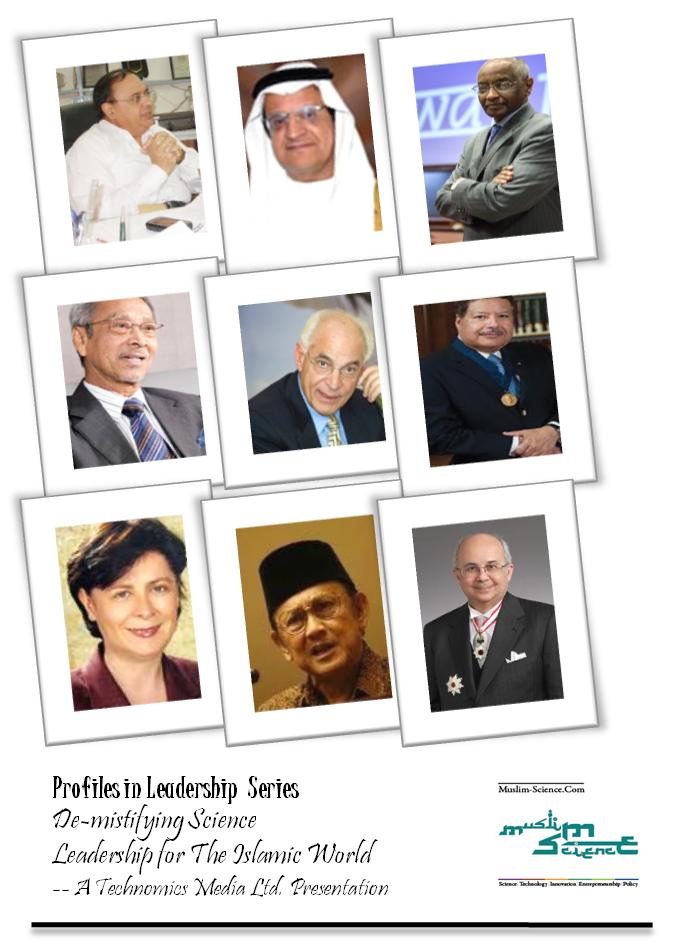
Articles by

Egypt: from revolutionary spirit to scientific progress
By: David Dickson and Bothina Osama
Published in SciDev.Net on 27 January 2012
One year after Egypt’s revolution, enthusiasm and prospects for science are high — but still need translation into a fully functioning system.
It is difficult to believe, given the optimism and vitality of current debates about science in Egypt, that less than two years ago a UNESCO report described science in the Arab world as being in a “vegetative state”. [1]
This week Egypt celebrates the first anniversary of the momentous events in Tahrir Square, and elsewhere, that brought down the autocratic regime of President Hosni Mubarak. These events showed both the pr...
SciDev.Net: Egypt’s Scientists Savour Post Revolution Year
 By: Hazem Badr
Published on SciDev.Net on 18 January 2012
There has been a surge in public interest in science as the route to recovery
[CAIRO] Scientists have been reflecting on the astonishing gains that the Egyptian revolution has delivered them, as the first anniversary of Egypt’s Tahrir Square uprising approaches next week (25 January).
Over the past year, the science budget has increased by more than a third, salaries have risen and plans have been made for a science and technology city.
“Change has begun on both financial and administrative levels,” Maged El-Sherbiny, president of the Academy of Scientific Research and Techn...
By: Hazem Badr
Published on SciDev.Net on 18 January 2012
There has been a surge in public interest in science as the route to recovery
[CAIRO] Scientists have been reflecting on the astonishing gains that the Egyptian revolution has delivered them, as the first anniversary of Egypt’s Tahrir Square uprising approaches next week (25 January).
Over the past year, the science budget has increased by more than a third, salaries have risen and plans have been made for a science and technology city.
“Change has begun on both financial and administrative levels,” Maged El-Sherbiny, president of the Academy of Scientific Research and Techn...
By: Hazem Badr
Published on SciDev.Net on 18 January 2012
There has been a surge in public interest in science as the route to recovery
[CAIRO] Scientists have been reflecting on the astonishing gains that the Egyptian revolution has delivered them, as the first anniversary of Egypt’s Tahrir Square uprising approaches next week (25 January).
Over the past year, the science budget has increased by more than a third, salaries have risen and plans have been made for a science and technology city.
“Change has begun on both financial and administrative levels,” Maged El-Sherbiny, president of the Academy of Scientific Research and Techn...
Islam Analysis (15): Money can’t buy quality research
By: Athar Osama
Published on SciDev.Net on 12 January 2012
Some Muslim countries’ powerful financial incentives to make quick progress in research could backfire, cautions Athar Osama.
Over a decade ago, several governments in the Islamic world woke up from decades of slumber to begin investing heavily in science and innovation. A funding boost helped set up new universities, enhance research grants, and send thousands of students to do PhDs in the developed world.
The regulators and ministries that rolled out these ambitious efforts cautioned against judging their effectiveness and viability too soon, pointing to the limited scientific capacity in...
SciDev.Net: Princess Sumaya on Science after the Arab Spring
 By: Mićo Tatalović
Published on 25 January 2012
Princess Sumaya bint El Hassan of Jordan talks to SciDev.Net about hopes for science in the Middle East, science diplomacy and the role of women scientists.
Members of royal families around the world often express support for science, but Princess Sumaya bint El Hassan of Jordan stands out for taking a particularly close and active interest.
She is a founder and president of the El Hassan Science City, president of Jordan’s Royal Scientific Society and chair of the board of trustees of the Princess Sumaya University for Technology. She has also recently helped set up a science and technology collaborat...
By: Mićo Tatalović
Published on 25 January 2012
Princess Sumaya bint El Hassan of Jordan talks to SciDev.Net about hopes for science in the Middle East, science diplomacy and the role of women scientists.
Members of royal families around the world often express support for science, but Princess Sumaya bint El Hassan of Jordan stands out for taking a particularly close and active interest.
She is a founder and president of the El Hassan Science City, president of Jordan’s Royal Scientific Society and chair of the board of trustees of the Princess Sumaya University for Technology. She has also recently helped set up a science and technology collaborat...
By: Mićo Tatalović
Published on 25 January 2012
Princess Sumaya bint El Hassan of Jordan talks to SciDev.Net about hopes for science in the Middle East, science diplomacy and the role of women scientists.
Members of royal families around the world often express support for science, but Princess Sumaya bint El Hassan of Jordan stands out for taking a particularly close and active interest.
She is a founder and president of the El Hassan Science City, president of Jordan’s Royal Scientific Society and chair of the board of trustees of the Princess Sumaya University for Technology. She has also recently helped set up a science and technology collaborat...
Islam Analysis (14): Planting seeds for a scientific revolution
 By: Athar Osama
Published on SciDev.Net on 15 December 2011
Arab Spring revolutionaries turning to governance must adopt knowledge and innovation as barometers for progress, says Athar Osama.
As revolutions swept countries and shook governments across the Middle East and North Africa (MENA) region this year, they created opportunities for greater public voice in governance. Tunisia, for example, recently went through an election, and the Egyptian people are in the process of electing an assembly whose job is to write a new constitution.
And as revolutionaries turn to governance, they will have to address the socioeconomic and cultural challenges facing ten...
By: Athar Osama
Published on SciDev.Net on 15 December 2011
Arab Spring revolutionaries turning to governance must adopt knowledge and innovation as barometers for progress, says Athar Osama.
As revolutions swept countries and shook governments across the Middle East and North Africa (MENA) region this year, they created opportunities for greater public voice in governance. Tunisia, for example, recently went through an election, and the Egyptian people are in the process of electing an assembly whose job is to write a new constitution.
And as revolutionaries turn to governance, they will have to address the socioeconomic and cultural challenges facing ten...
By: Athar Osama
Published on SciDev.Net on 15 December 2011
Arab Spring revolutionaries turning to governance must adopt knowledge and innovation as barometers for progress, says Athar Osama.
As revolutions swept countries and shook governments across the Middle East and North Africa (MENA) region this year, they created opportunities for greater public voice in governance. Tunisia, for example, recently went through an election, and the Egyptian people are in the process of electing an assembly whose job is to write a new constitution.
And as revolutionaries turn to governance, they will have to address the socioeconomic and cultural challenges facing ten...
Making Malaysia’s Third Science Policy Work
 By: Tan Sri Omar Abdul Rahman
The government’s science and technology (S&T) apparatus is now in active consultations to formulate the third national S&T policy (NSTP3) and I have been involved in some and benefitted from them.
In an earlier article (NST 9/7/11), I had briefly described the two previous policies and given some thoughts on what the essentials of the NSTP3 should be. I am now offering further thoughts on the subject.
However, let us first briefly revisit the evolution of science policies in general. Initially it was just a “science policy” emphasizing the need to do “good science”. Then it was an “S&T policy”, linking knowled...
By: Tan Sri Omar Abdul Rahman
The government’s science and technology (S&T) apparatus is now in active consultations to formulate the third national S&T policy (NSTP3) and I have been involved in some and benefitted from them.
In an earlier article (NST 9/7/11), I had briefly described the two previous policies and given some thoughts on what the essentials of the NSTP3 should be. I am now offering further thoughts on the subject.
However, let us first briefly revisit the evolution of science policies in general. Initially it was just a “science policy” emphasizing the need to do “good science”. Then it was an “S&T policy”, linking knowled...
By: Tan Sri Omar Abdul Rahman
The government’s science and technology (S&T) apparatus is now in active consultations to formulate the third national S&T policy (NSTP3) and I have been involved in some and benefitted from them.
In an earlier article (NST 9/7/11), I had briefly described the two previous policies and given some thoughts on what the essentials of the NSTP3 should be. I am now offering further thoughts on the subject.
However, let us first briefly revisit the evolution of science policies in general. Initially it was just a “science policy” emphasizing the need to do “good science”. Then it was an “S&T policy”, linking knowled...